Loss of Consortium: Definition, Claim, and Damages

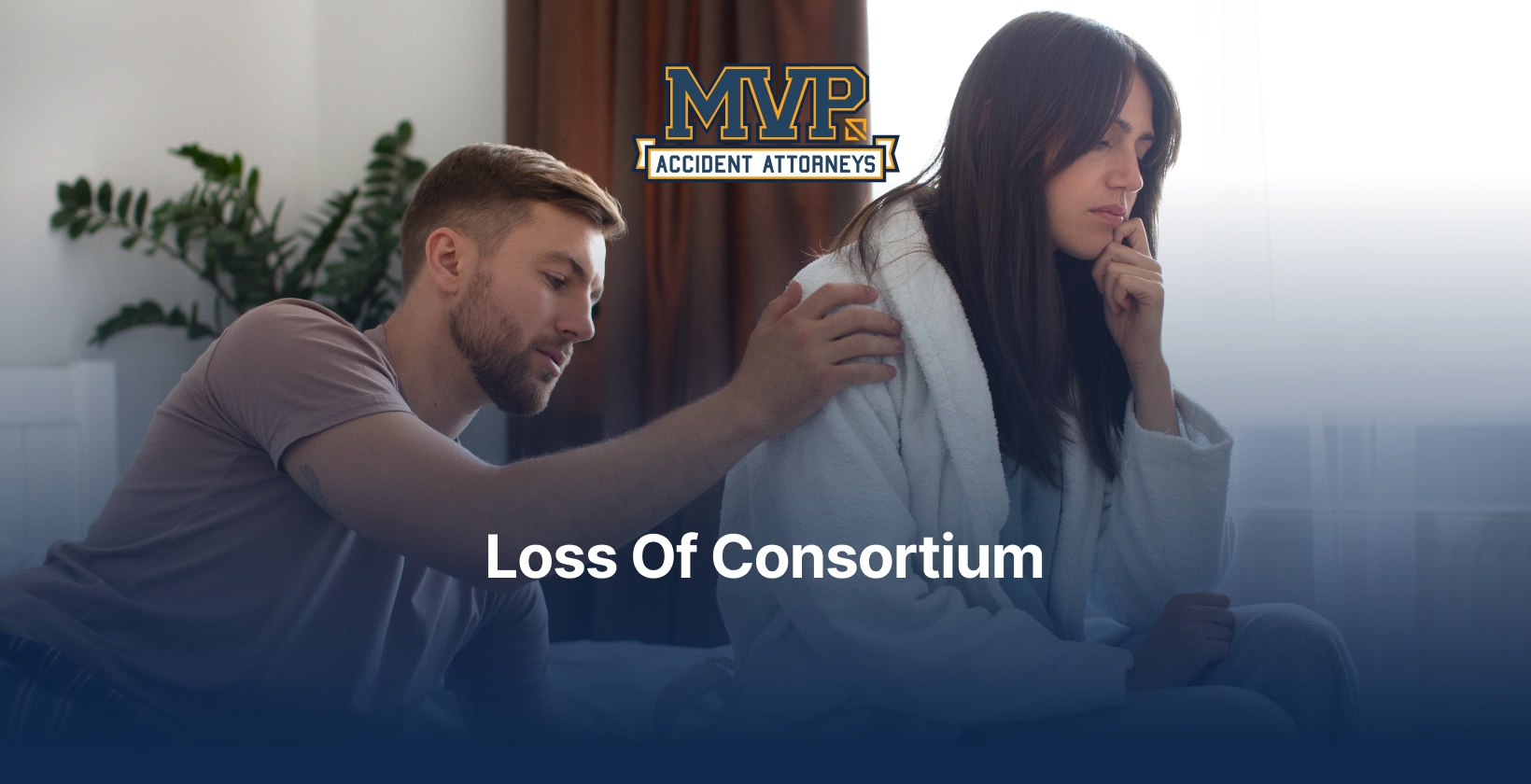
Loss of consortium refers to the legal harm suffered when an injury or death deprives a spouse or family member of companionship, support, and relational benefits. Loss of consortium claims recognize that wrongful acts don’t only harm the injured party; they ripple outward, damaging the bonds that sustain marriages and families. This article explores what loss of consortium means in legal terms, how a claim works, who can file one, how it connects to pain and suffering damages, how liability rules shape recovery, and what situations give rise to consortium damages.
What is Loss of Consortium?
Loss of consortium is a legal claim arising when a spouse or family member suffers harm to their marital or familial relationship due to another party’s wrongful act. It compensates non-economic losses: the intangible, deeply personal aspects of a relationship that an injury can irreparably damage. Courts recognize consortium as a distinct category of harm, separate from the physical injuries suffered by the primary victim.
Loss of consortium covers affection, companionship, moral support, and household or marital services. It is typically filed by the uninjured spouse or qualifying family member, not the injured party themselves. Because it is a derivative claim, one that depends on the existence and outcome of the primary injury case, its success is directly tied to the injured spouse’s ability to establish liability against the defendant.
How is Loss of Consortium Defined in Law?
In law, loss of consortium is defined as the deprivation of the benefits of a marital or familial relationship caused by a third party’s wrongful conduct. Most jurisdictions define it as encompassing companionship, affection, sexual relations, and domestic services. The uninjured spouse holds the right to bring this claim independently, though it remains legally tethered to the primary injury action. Courts have progressively broadened the definition to capture the full relational and emotional impact of serious injuries on families.
What Does Loss of Consortium Mean in Legal Terms?
Loss of consortium, in legal terms, is the recognized right to recover compensation for marital or familial benefits lost due to another party’s wrongful act. It encompasses the loss of companionship, emotional support, affection, and marital services that an injured spouse can no longer provide. The loss must directly result from the injury, and the claim must be brought by the uninjured spouse. Courts evaluate the depth and character of the marital relationship when assessing damages. If you are navigating a legal dispute involving consortium, establishing a clear connection between the injury and the relational harm is essential to recovery.
Is Loss of Consortium About Losing Companionship and Support?
Yes. Loss of consortium is fundamentally about losing companionship and support. When a serious injury disrupts a marriage, the uninjured spouse endures profound relational and emotional losses that extend well beyond financial hardship. The law recognizes this harm as compensable, acknowledging that the injury effectively robs a spouse of the partnership, closeness, and mutual care that define a healthy marriage. Damages awarded in consortium claims are designed to address these emotional and relational losses, reinforcing the legal system’s recognition of the enduring value of the marital bond.
How Does a Loss of Consortium Claim Work?
A loss of consortium claim functions as a derivative legal action brought by the uninjured spouse or family member alongside a primary personal injury or wrongful death case. To succeed, the claimant must demonstrate the existence of a valid marital or familial relationship, a serious injury caused by the defendant’s wrongful act, and a measurable impact on the relational benefits of that relationship. Understanding how these claims are structured and how they interact with the underlying case is essential for any family pursuing full compensation.
What is a Loss of Consortium Claim in a Personal Injury Case?
A loss of consortium claim in a personal injury case is a separate legal action filed by the uninjured spouse to recover compensation for the marital losses caused by the injured spouse’s harm. The claim is directly linked to the personal injury case; if the injured spouse cannot establish the defendant’s liability, the consortium claim typically fails as well. Proving the claim requires demonstrating the tangible impact the injury has had on the marital relationship. Consulting an experienced personal injury attorney is critical to properly documenting these losses and maximizing the full scope of recovery available to your family.
Can a Spouse File a Loss of Consortium Claim Separately?
In most jurisdictions, a spouse may file a loss of consortium claim, but it cannot proceed entirely independently; it remains derivative of the primary injury action. The uninjured spouse must demonstrate a personal, distinct loss resulting from the defendant’s wrongful conduct. Some states permit a separate filing, while others require the claim to be joined with the injured spouse’s lawsuit. Courts may also limit or reduce the consortium award if filing separately creates the risk of inconsistent verdicts or double recovery, making jurisdictional rules a decisive factor in claim strategy.
Can Loss of Consortium be Claimed in Wrongful Death Cases?
Yes. Surviving spouses and qualifying family members may claim loss of consortium in wrongful death cases. When a wrongful act causes death rather than injury, the surviving spouse loses all future companionship, affection, and support permanently. Most jurisdictions expressly recognize this claim under wrongful death statutes, allowing families to recover for the profound emotional and relational harm that accompanies the loss of a spouse or parent. These damages serve to compensate for grief and deprivation that no financial award can fully restore, but that the law acknowledges as deeply real.
Who Can File a Loss of Consortium Claim?
The right to file a loss of consortium claim is not limited to spouses. Courts across many jurisdictions recognize that serious injuries harm entire families. Three principal categories of claimants are recognized:
1. Spouse: A spouse may claim loss of companionship and support when the other spouse sustains a serious injury or dies due to a wrongful act. The law acknowledges the profound disruption to the marital relationship, including emotional closeness, shared responsibilities, and mutual affection.
2. Children: Children may pursue loss of parental consortium when a parent’s injury or death deprives them of guidance, care, and emotional support. Courts recognize the distinctive harm children suffer when a parent can no longer fulfill their nurturing role.
3. Parents: Parents may assert filial consortium claims when a child’s injury or death severs the parent-child bond. This extends legal recognition to the unique grief and relational loss that parents endure when their child is harmed by another’s wrongful conduct.
What is Filial Consortium?
Filial consortium is the legal right of a parent to recover compensation for the loss of a child’s companionship, affection, and support caused by injury or death. Filial consortium claims acknowledge that the parent-child relationship carries profound emotional and relational value that the law should protect. Recognized in a growing number of jurisdictions, filial consortium allows parents to seek recovery for the deeply personal grief and deprivation they experience when another party’s wrongful act permanently disrupts that irreplaceable bond between parent and child.
Who Can Claim Loss of Consortium?
Loss of consortium claims may be filed by spouses, children, and parents, depending on the jurisdiction and the nature of the relationship harmed. Spouses have the most broadly recognized right, but courts in many states have expanded consortium protections to cover parent-child relationships as well. The claimant must demonstrate a legally recognized relationship, a qualifying injury or death caused by a third party, and a measurable loss of relational benefits resulting from that harm.
Can Children Claim Loss of Parental Consortium?
Yes. Children can claim loss of parental consortium when a parent’s serious injury or death deprives them of care, guidance, and emotional support. The claim recognizes the distinctive, non-economic harm children sustain when a wrongful act disrupts their relationship with a parent. Courts require proof that the injury materially impacted the parent’s ability to fulfill their caregiving role. While not universally recognized across all states, parental consortium claims for children have gained increasing acceptance as courts acknowledge the lasting emotional harm inflicted on children by another party’s negligence.
How is Loss of Consortium Connected to Pain and Suffering Damages?
Loss of consortium and pain and suffering damages are closely connected because both compensate for non-economic harm: the intangible losses that resist precise monetary calculation. Consortium focuses specifically on the relational and emotional harm sustained by the uninjured spouse or family member, while pain and suffering addresses the physical and emotional anguish of the injured party. Courts regularly award both categories of damages in serious injury cases to ensure that all dimensions of harm, personal and relational, receive full and fair recognition.
How do Courts Compare Loss of Consortium and Pain and Suffering?
Courts treat loss of consortium and pain and suffering as distinct but complementary categories of non-economic damages. Pain and suffering compensates the injured person for their own physical agony, emotional distress, and diminished quality of life. Loss of consortium, by contrast, compensates the spouse or family member for the relational harm they experience as a consequence of that injury. By maintaining this distinction, courts ensure that each affected party receives appropriate compensation without conflating their separate injuries. The clear separation also prevents double recovery and preserves the integrity of damage awards in complex personal injury litigation.
Are Loss of Consortium Damages Considered Non Economic Damages?
Yes. Loss of consortium damages are non-economic damages. They compensate for emotional, relational, and intangible losses rather than quantifiable financial harms like medical expenses or lost wages. Courts evaluate these damages based on the quality of the marital or familial relationship and the degree to which it was disrupted. Because they focus on human connection rather than calculable economic loss, consortium damages are assessed separately from economic damages, ensuring that the full emotional and relational cost of a wrongful injury receives independent and meaningful legal recognition.
How do Liability Rules Affect a Loss of Consortium Claim?
Liability rules play a decisive role in shaping whether a loss of consortium claim succeeds and what damages may be recovered. Because consortium is a derivative claim, the legal theory under which the injured spouse pursues recovery, whether negligence, strict liability, or an intentional tort, directly determines the evidentiary burden, the available defenses, and the scope of compensation available to the uninjured spouse or family member. Understanding the applicable liability framework is essential to building a viable consortium claim.
What is the Difference Between Negligence and Strict Liability in Loss of Consortium?
Negligence and strict liability are two distinct legal theories that can support a loss of consortium claim, but they differ significantly in their evidentiary demands. Negligence requires the claimant to establish that the defendant failed to exercise reasonable care, directly causing the injury. Strict liability, by contrast, imposes responsibility regardless of fault, typically in cases involving inherently dangerous activities or defective products. Negligence requires demonstrating carelessness, while strict liability focuses solely on causation and harm. The applicable theory shapes litigation strategy, the burden of proof, and ultimately the consortium claimant’s prospects for a successful recovery.
Does a Loss of Consortium Claim Require Proof of Negligence?
It depends. In most personal injury cases, establishing the defendant’s negligence is a prerequisite for a successful consortium claim, since the claim derives from the primary injury action. However, where the underlying claim rests on strict liability or an intentional tort, proof of negligence is not required; causation and harm are the operative standards. Some statutes further modify negligence requirements in specific contexts. The applicable legal basis profoundly affects claim strategy, shaping how evidence is gathered, what defenses the defendant may assert, and how courts evaluate the overall merits of recovery.
What Situations Allow a Claim for Loss of Consortium Damages?
Loss of consortium damages arise in a range of serious injury and wrongful death scenarios. Courts recognize the claim wherever a wrongful act causes sufficient harm to a marital or familial relationship. Four principal situations give rise to consortium claims:
1. Personal Injury: When a spouse is harmed in an accident caused by another’s negligence, the uninjured spouse may recover for the resulting loss of companionship, affection, and support that the injury has disrupted or permanently eliminated from the marital relationship.
2. Wrongful Death: When a spouse or parent dies due to another party’s wrongful act, surviving family members may claim consortium damages to compensate for the permanent loss of companionship, guidance, and emotional support the deceased can no longer provide.
3. Medical Malpractice: When a healthcare provider’s negligent care causes serious injury, the injured patient’s spouse or family may pursue consortium damages for the relational harm resulting from the negligent treatment and its lasting effects on the marital bond.
4. Intentional Torts: When a defendant intentionally commits an assault or other deliberate harmful act, the injured party’s spouse may recover consortium damages, as intentional wrongdoing that injures one spouse foreseeably devastates the marital relationship as well.
How do Car Accident Court Cases Lead to Loss of Consortium Claims?
Car accident cases are among the most frequent origins of loss of consortium claims. When a collision caused by a negligent driver leaves one spouse with catastrophic injuries, the ripple effects on the marriage are often severe and lasting. The injured spouse may be unable to provide companionship, participate in shared activities, perform household duties, or maintain the emotional intimacy that defines a healthy partnership. As a result, the uninjured spouse suffers a profound relational loss that the law compensates through a consortium claim filed alongside the primary personal injury action. Documenting the full marital impact is critical to maximizing recovery.
Can Maritime Laws Like the Jones Act or DOHSA Allow Consortium Damages?
Yes. Certain maritime laws permit recovery for a spouse’s loss of consortium when a seaman or maritime worker is killed or seriously injured. Damages under the Jones Act allow injured seamen to pursue compensation for negligence, and consortium claims may be appended to those actions in some jurisdictions. The Death on the High Seas Act (DOHSA) governs wrongful death claims in international waters, though its damages framework has historically limited non-economic recovery. Courts carefully evaluate the relational harm sustained by the spouse or family, applying maritime statutes to extend consortium protections beyond land-based personal injury law where permitted.
Share this article:
Related Articles
Privileged Communication
Recklessness: Definition, Meaning, and Examples